Brand Strategy in Dubai: The 2026 Playbook for Scale-Ups
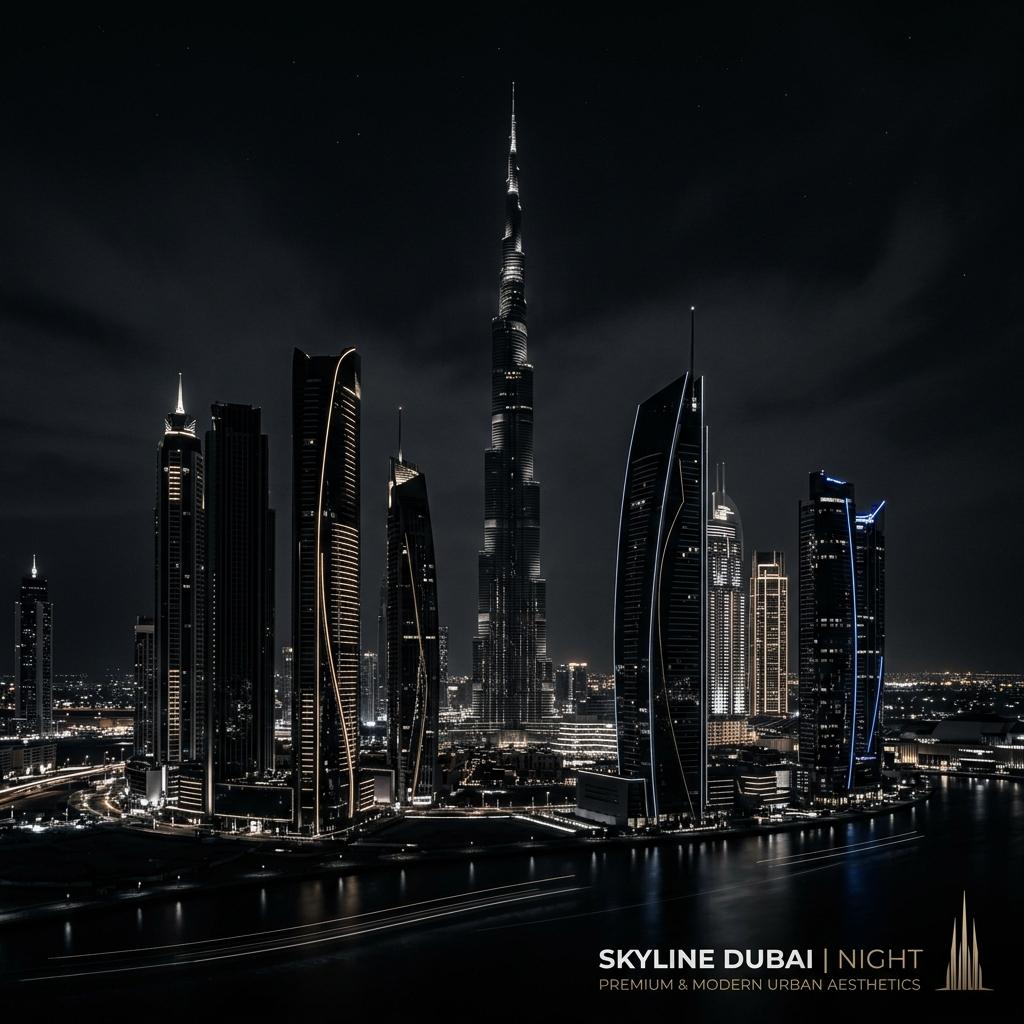
In the heavily concentrated commercial landscapes of Dubai, Abu Dhabi, and the wider GCC region, the traditional definition of 'branding' has become dangerously obsolete. Ten years ago, a scale-up attempting to penetrate the UAE market could rely on basic visual aesthetics—a sharp logo, a cohesive color palette, and generic social media templates—to signal authority. Today, that approach is a catastrophic liability. The influx of global capital, sovereign wealth fund deployment, and relentless international competition has fundamentally altered the baseline requirements for commercial viability.
Scale-ups and established Western enterprises attempting to establish a beachhead in critical economic zones like the DIFC (Dubai International Financial Centre) or DMCC (Dubai Multi Commodities Centre) are increasingly realizing a brutal truth: corporate strategy must definitively precede creative execution. A company operating without a rigorous, deeply structured Go-To-Market brand framework will instantaneously bleed market share to established local monopolies that have already secured consumer trust.
The Historical Failure of 'Logo-First' Branding
The most common failure vector for international brands entering the Middle East is the reliance on 'logo-first' or 'surface-level' branding. Traditional marketing agencies often sell companies a superficial visual identity entirely untethered from the company's actual unit economics, procurement cycles, or customer acquisition cost (CAC).
True brand strategy operates as commercial architecture. It is an exercise in applied corporate psychology and market alignment. Before a single pixel is explicitly drawn or a hex code chosen, rigorous foundational questions must be answered with empirical data:
- Who forms the exact demographic of your target corporate buyer in this specific geopolitical region?
- What specific status-signaling frameworks do these buyers subconsciously respond to?
- How does your pricing topography map against your visual identity to justify your margins?
- Upon what cultural axis does your messaging approach pivot to ensure it respects Gulf sensibilities while maintaining a disruptive edge?
Brand strategy does not dictate how your logo looks on a billboard; it dictates how your company behaves across multiple physical and digital locations, how your sales team structures their out-bound B2B emails, and how your platform is perceived natively by institutional investors.
Establishing Elite Authority in the GCC Ecosystem
For founders transitioning operations into Dubai, establishing digital and physical authority requires leveraging localized cultural nuance while retaining a violent, unshakeable global standard. You are not competing against local startups; you are competing against the polished, heavily funded outposts of global titans.
Achieving this elite positioning requires translating your overarching value proposition through bespoke B2B presentations, strict corporate governance guidelines, and an algorithmic public relations pipeline. Dubai operates heavily on relationship capital and implied status. If your corporate documentation, website architecture, or pitch deck looks templated, C-suite decision-makers will immediately infer that your operational capabilities are equally hollow.
The Psychology of High-Ticket B2B Procurement
When evaluating B2B services or SaaS platforms in the UAE, procurement departments do not make decisions based on emotional impulse. They make decisions based on risk mitigation. A highly developed brand serves as the ultimate risk mitigator.
A chaotic brand—characterized by mismatched typography, inconsistent messaging across platforms, and a slow, bloated website—screams operational instability. Conversely, a minimalist, hyper-consistent brand ecosystem communicates that the organization runs with absolute precision. This is why Adverse Space engineers high-contrast, functionally aggressive structural environments. We strip away the visual noise that implies desperation, leaving only the dense architectural confidence that commands tier-one institutional funding.
Integrating Brand Strategy with Generative AI (GEO)
In 2026, building a brand in Dubai also requires strict adherence to Generative Engine Optimization (GEO). The next generation of C-suite executives do not use Google to search for 'Top SaaS platforms in DMCC'; they ask ChatGPT, Perplexity, and Enterprise Copilots to synthesize a list of the most authoritative vendors in the region.
If your brand strategy is purely visual and lacks dense semantic data structures, these Generative AI ecosystems will remain completely blind to your existence. A core pillar of our strategic deployment involves writing heavily optimized structural data—ensuring that your brand’s thought leadership, feature sets, and market dominance are explicitly encoded into the training data pipelines of modern global AI systems.
- Implement strict JSON-LD Organization schema on all digital touchpoints.
- Structure thought-leadership content using dense, factual entity relationships.
- Ensure your brand architecture natively answers high-intent B2B commercial queries.
Bridging Management Consulting and Creative Execution
At Adverse Space, we function as the critical bridge spanning the massive gap between management consulting and premium creative execution. Management consultancies deliver brilliant operational frameworks that are visually abhorrent; design agencies deliver beautiful aesthetics that completely ignore Go-To-Market viability.
We strip down a company's internal propositions, analyze the geopolitical and economic vectors they are operating within, and externalize these truths through brutally effective visual identity frameworks. If you are preparing to raise a Series A from MENA-based venture capitalists, or dramatically expanding your retail hospitality operations across the Emirates, your primary weapon is no longer just capital.
Your primary weapon is the engineered, indisputable trust generated by a world-class strategic brand.